

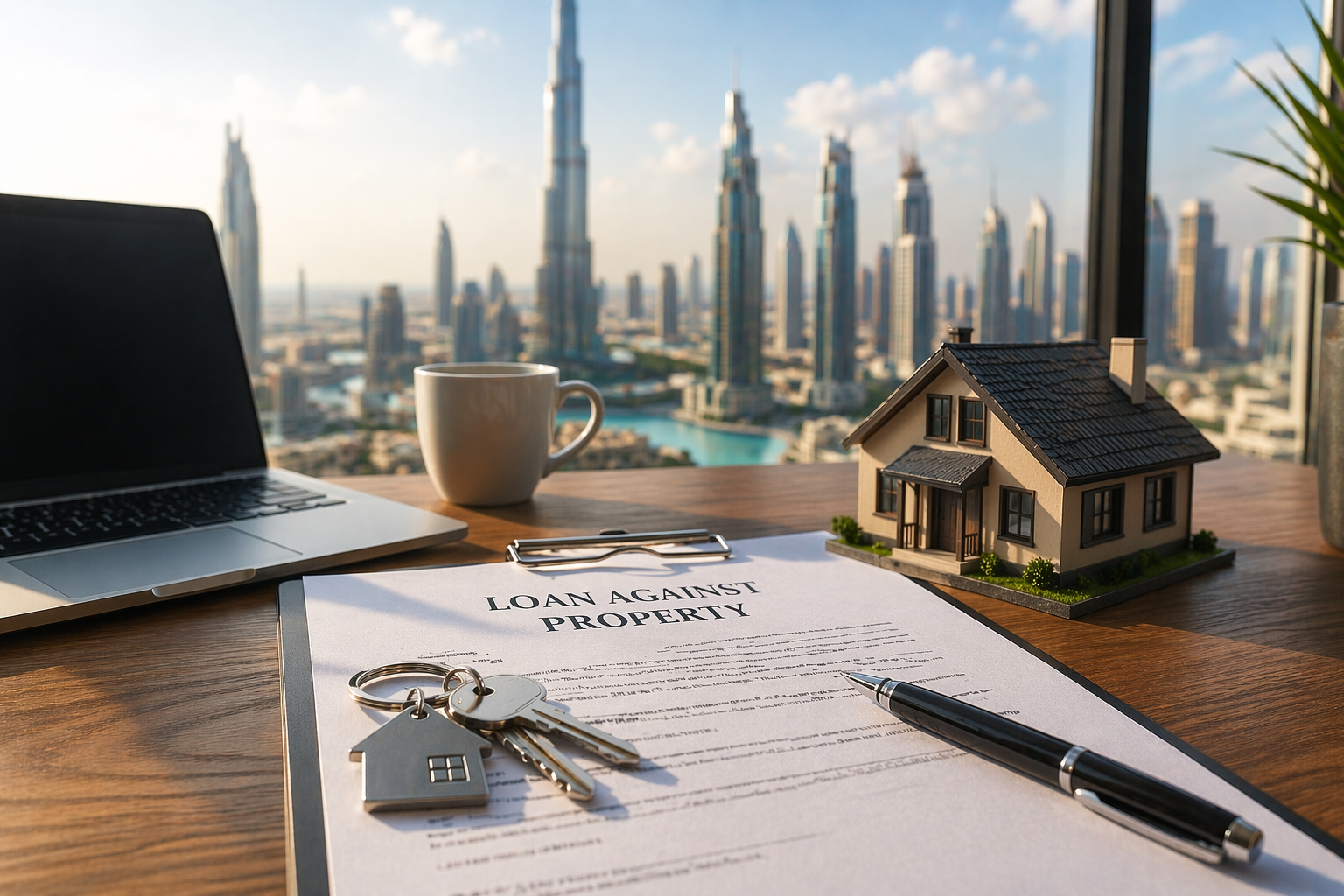
Your Dubai property is not just a home; it is a powerful financial engine. While most owners focus on rental yields and capital appreciation, savvy investors and homeowners are quietly leveraging something even more immediate: the equity already sitting within their properties. A loan against property (LAP) in Dubai gives you direct access to that equity without forcing you to sell, downsize, or disrupt your long-term investment strategy. In 2026, with Dubai’s real estate market continuing to strengthen and lending regulations becoming increasingly refined, this financing option stands out as one of the most practical and intelligent tools available to property owners across the emirate.
Whether you are looking to fund a business expansion, consolidate high-interest debts, renovate your home, or seize a new investment opportunity, understanding how to harness the full potential of a loan against property in Dubai is essential. Consequently, this comprehensive guide walks you through everything you need to know, from eligibility and loan-to-value ratios to interest rates, the approval process, and expert tips to secure the best possible terms.
What Exactly Is a Loan Against Property, and Why Does It Matter?
A loan against property in Dubai is a secured financing product where you pledge an existing, owned property as collateral to borrow funds from a bank or licensed financial institution. Unlike a traditional home purchase mortgage, where the loan finances the acquisition of a new asset, a LAP leverages an asset you already own. In essence, your property becomes the key that unlocks a significant line of credit, all while remaining in your possession.
This distinction matters enormously. Because the loan is secured against a tangible, high-value asset, banks are able to offer larger loan amounts, longer repayment tenures, and more competitive interest rates compared to unsecured personal loans or business credit lines. Furthermore, the funds you receive carry no restrictions on usage; you can deploy the capital toward home renovations, education fees, medical expenses, business growth, or even further property investments. It is a flexible, multi-purpose financial instrument uniquely suited to Dubai’s dynamic real estate landscape.
Who Qualifies? Breaking Down the Eligibility Requirements
Before you approach a lender, it is critical to understand the eligibility framework that banks apply when evaluating your application for a loan against property in Dubai. Lenders assess multiple dimensions simultaneously, including your residency status, financial health, and the quality of the property you intend to pledge.
Residency Status and Its Impact on Your Terms
Your residency classification plays a decisive role in the loan terms you can access. UAE Nationals typically enjoy the most favorable conditions, qualifying for loan-to-value ratios of up to 85% alongside streamlined documentation requirements. Expat residents generally qualify for up to 80% LTV, depending on the bank and the property profile. Non-residents, meanwhile, face stricter parameters, with LTV ratios usually capped around 60% and more extensive documentation demands. These variations directly reflect the risk assessment frameworks that UAE-regulated banks follow, so understanding where you stand before applying saves valuable time.
Income, Employment, and Financial Standing
Banks examine your repayment capacity rigorously. As of 2026, most lenders require a minimum monthly income of around AED 20,000 for salaried applicants and approximately AED 35,000 for self-employed individuals, though these figures vary by institution. Additionally, your credit history carries substantial weight; a strong repayment track record and a low debt-to-burden ratio significantly boost your chances of approval. Age limits also apply: loans must typically be fully repaid by the age of 65 for salaried borrowers and 70 for self-employed applicants.
The Property Must Pass the Test: Understanding Asset Eligibility
Beyond your personal financial profile, the property you pledge as collateral undergoes its own rigorous evaluation. Not every property automatically qualifies, and understanding what banks look for helps you position your application strategically.
First and foremost, the property should be either fully paid off or carry substantial built-up equity. A valid title deed registered with the Dubai Land Department is non-negotiable. Banks also assess the property’s location, condition, and market demand. Properties situated in established, high-demand communities or prime Dubai neighborhoods consistently attract stronger valuations, which in turn translates to higher borrowing capacity for the applicant.
In addition to physical condition and location, the bank appoints an approved independent property valuator who conducts a formal assessment. This valuation serves as the foundation for determining your LTV ratio and, therefore, the maximum loan amount you can access. Investing in maintenance and presentation before the valuation takes place can meaningfully influence the outcome in your favor.
How Much Can You Actually Borrow? The Loan-to-Value Breakdown
The loan-to-value (LTV) ratio is arguably the most important number in your LAP equation. It determines the percentage of your property’s assessed market value that the bank is willing to lend. Understanding the current LTV thresholds in Dubai and how they apply to your specific situation allows you to calculate your maximum borrowing power with precision.
As of 2026, the LTV framework in Dubai breaks down as follows: UAE Nationals can access up to 85% of their property’s value, expat residents up to 80%, and non-residents around 60%. However, it is worth noting that for high-value properties valued above AED 5 million, or for second and investment properties, LTV ratios may be adjusted downward to a range of 60–75%, depending on the lender’s internal policies and market conditions.
The type of property you own also influences your borrowing capacity. Premium residential units in sought-after locations, think waterfront apartments, high-floor residences in luxury towers, or spacious villas in master-planned communities, generally command stronger valuations and therefore offer greater leverage. Conversely, properties in areas with slower market activity or higher supply may receive more conservative valuations.
2026 Interest Rates and the Costs You Cannot Afford to Overlook
Interest rates for a loan against property in Dubai are shaped by a combination of macroeconomic conditions, your individual borrower profile, and the rate structure you choose. Understanding the full cost landscape, beyond just the headline interest rate, is essential for making an informed financial decision.
Fixed vs. Variable Rate Structures
UAE banks typically offer two primary rate structures. Fixed-rate periods last between one and five years, after which the loan reverts to a variable rate. Variable rates are linked to EIBOR (the Emirates Interbank Offered Rate) plus a bank margin. For borrowers who prefer predictability in their repayments, locking into a fixed rate during periods of favorable market conditions can deliver significant long-term savings. Islamic financing options are also widely available, structured around profit rates rather than interest, in compliance with Sharia principles.
Current Rate Ranges (2026 Snapshot)
Based on current market conditions, UAE Nationals can access fixed rates in the range of approximately 3.79% to 3.99%, with variable rates pegged at EIBOR plus 1.50% to 1.89%. Expat residents can expect fixed rates between approximately 3.89% and 4.50%, with variable rates at EIBOR plus 1.79% to 1.99%. Non-residents face a broader range, with fixed rates from approximately 4.19% to 6.50% and variable margins of EIBOR plus 2.00% to 2.50%.
Additional Fees to Factor Into Your Budget
Beyond interest, borrowers should also account for a processing fee typically ranging from 0.25% to 1% of the loan amount, a property valuation fee of approximately AED 2,500 to AED 3,500, a mortgage registration fee of around 0.25% of the loan amount payable to the Dubai Land Department, and mandatory life and property insurance premiums. Altogether, these costs can meaningfully impact your net borrowing position, so factoring them into your financial plan from the outset is strongly advisable.
Step Into the Process: How the Loan Approval Journey Unfolds
Once you decide to move forward with a loan against property in Dubai, the process follows a structured sequence that typically spans several weeks. Understanding each stage prepares you to engage confidently with your lender and avoid unnecessary delays.
The Step-by-Step Approval Process
The journey begins with an initial eligibility check and, where available, a pre-approval application, a smart move that gives you a realistic picture of your borrowing capacity before committing significant time and resources. Next, you submit your full documentation package, which triggers the formal underwriting process. An approved independent valuator then conducts a professional assessment of your pledged property. Following that, the bank completes its credit checks and risk evaluation before issuing a formal loan offer. Once you accept and sign the offer, the mortgage is registered with the Dubai Land Department and funds are disbursed to your account.
Realistic Timelines to Plan Around
Salaried applicants and UAE Nationals typically complete the process in three to five weeks, while self-employed individuals and expat applicants should plan for four to six weeks. Borrowers who secure pre-approval can compress the initial stages significantly, often completing that phase within one to two weeks. Throughout the process, working with knowledgeable real estate and finance professionals who understand Dubai’s regulatory landscape can make a tangible difference in both speed and outcome.
Documentation Decoded: What You Need to Have Ready
Preparing a complete and well-organized documentation package is one of the most effective steps you can take to accelerate your application and project credibility to the lender. The specific documents required vary based on your employment status.
Salaried applicants typically need to provide a valid passport and UAE residence visa, an Emirates ID, a salary certificate from their employer, three to six months of personal bank statements, and a credit bureau report. Self-employed applicants face a more extensive list, including a valid trade license, audited financial statements for the past two years, company bank statements, and personal financial records. All applicants will need to provide the original title deed of the property being pledged, along with the formal property valuation report arranged by the bank.
Organizing these documents in advance — and ensuring everything is current and accurate — removes one of the most common sources of delays in the approval process. Furthermore, presenting a well-prepared file signals to the lender that you are a disciplined, detail-oriented borrower, which can subtly influence the terms of the offer you receive.
Smart Strategies to Unlock Better Rates and Higher Approval Odds
Securing a loan against property in Dubai is not simply about meeting the minimum eligibility criteria. Proactive borrowers who approach the process strategically consistently access better rates, higher LTV ratios, and more favorable repayment conditions. Here is how you can position yourself for optimal outcomes.
First, consider arranging a salary transfer to the lender’s bank. Many institutions offer lower interest rates meaningfully to borrowers who transfer their monthly salary through their accounts, as this reduces the perceived repayment risk. Second, take active steps to improve your credit score before applying, pay down existing liabilities, clear any overdue balances, and avoid taking on new credit in the months prior to your LAP application. Third, choose your pledged property wisely: properties in high-demand, well-established communities command stronger valuations, directly boosting your borrowing capacity.
Additionally, compare multiple lenders before committing to a single offer. Interest rate differences of even 0.25% to 0.50% can translate into tens of thousands of dirhams in savings over the loan tenure. Consulting with a qualified mortgage advisor who has established relationships across multiple UAE banks is a worthwhile investment, as they can often negotiate terms that individual applicants cannot access independently. Finally, consider locking in a fixed rate when market conditions favor it. This shields your repayments from EIBOR fluctuations and enables more reliable financial planning.
Is a Loan Against Property the Right Move for You?
A loan against property in Dubai represents one of the most powerful yet underutilized financial instruments available to property owners in the emirate. It preserves your asset, generates immediate liquidity, and provides access to capital at rates far more competitive than unsecured alternatives. Nevertheless, like any secured financing product, it carries risk; defaulting on repayments puts your property at stake, so entering into a LAP with a clear, realistic repayment plan is absolutely essential.
For property owners who hold significant equity, maintain a strong financial profile, and have a specific purpose for the funds, whether business growth, debt restructuring, home enhancement, or further investment, a loan against property in Dubai can serve as a genuine catalyst for financial progress. The key lies in approaching the process with preparation, due diligence, and a long-term perspective that respects both the opportunity and the responsibility this product entails.
Dubai’s real estate market continues to deliver exceptional value for those who understand how to leverage it intelligently. Your property is already working for you through appreciation and rental yield — now, with the right strategy, it can do even more.
Frequently Asked Questions
Can expats access an 85% LTV ratio? No. The 85% LTV threshold is generally reserved for UAE Nationals. Expat residents typically qualify for up to 80%, subject to the lender’s internal policies and the property’s profile.
What is EIBOR, and how does it affect my loan repayments? EIBOR stands for the Emirates Interbank Offered Rate. It serves as the benchmark rate to which variable loan margins are added. When EIBOR rises, variable-rate repayments increase accordingly, making fixed-rate periods particularly attractive during periods of rate uncertainty.
How long does the full approval process take? Salaried applicants typically complete the process in three to five weeks. Self-employed and expat applicants should anticipate four to six weeks. Pre-approval can reduce initial timelines significantly.
Are Islamic financing options available for loans against property? Yes. Most major UAE banks offer Sharia-compliant financing structures, where profit rates replace conventional interest. These products operate on the same fundamental premise but conform to Islamic finance principles.
What happens if I default on a loan against property? Defaulting on a LAP puts your pledged property at risk of repossession by the lender. It is therefore critical to enter the agreement with a robust, realistic repayment plan and to communicate proactively with your bank if you experience any financial difficulties.