

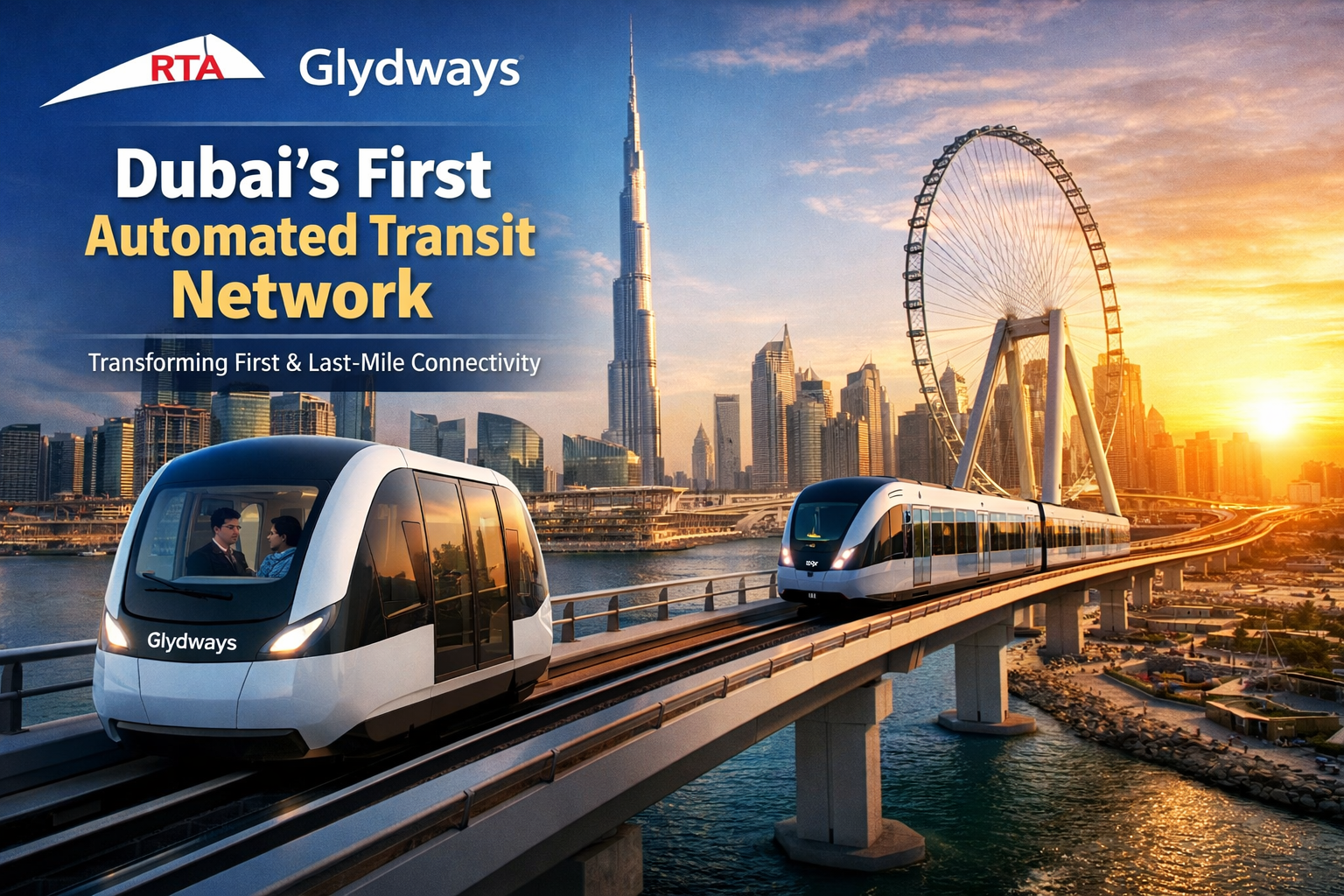
Dubai is taking another step toward the future of urban transportation. The Roads and Transport Authority (RTA) has signed a cooperation agreement with Glydways, a company known for automated transit networks, to introduce a new smart mobility programme in the city. The initiative is designed to improve how people move between major transit hubs and final destinations, especially for short urban trips that are often the most inconvenient part of a journey.
This matters because public transport is only as useful as its connections. Even when metro systems are fast and efficient, many commuters still struggle with the “first mile” from home to the station and the “last mile” from the station to work, shopping, or leisure destinations. Dubai’s new automated transit concept aims to close that gap with a cleaner, more flexible, and more personalized travel option.
A New Chapter for Smart Transport in Dubai
The agreement between RTA and Glydways marks the launch of what Dubai describes as its first automated transit network programme. It reflects the city’s larger push toward smart, sustainable mobility and supports the continued expansion of its public transport ecosystem. The signing was carried out by Mattar Al Tayer on behalf of the RTA and Mark Seeger on behalf of Glydways.
At its core, the project is about making urban travel smoother and more connected. Rather than replacing existing public transport, the network is meant to complement it. In practical terms, that means creating easier links between metro stations and nearby destinations that are too far to walk comfortably but too short to justify a conventional transport option.
What Is an Automated Transit Network?
Glydways’ system is based on autonomous electric vehicles that run on dedicated guideways rather than mixing with normal road traffic. These guideways are compact and narrow, and they can be built either above ground or at street level. Because of that smaller physical footprint, the system is designed to reduce disruption to existing roads and utility infrastructure.
For readers unfamiliar with this type of technology, it helps to think of it as a hybrid between public transit and private ride service. Instead of waiting for a large bus or train that stops at every station, passengers can access smaller vehicles on demand for direct point-to-point trips. That approach can reduce travel time, improve convenience, and make short urban journeys feel much more seamless. The article also notes that the service is designed to operate around the clock and deliver a more personalized in-vehicle experience, including customizable climate control and entertainment features.
Why This System Stands Out
One of the most interesting features of the proposed network is its operating model. The vehicles are electric, autonomous, and designed for non-stop direct travel. They also produce zero local emissions, which supports Dubai’s sustainability goals while offering a modern transport experience.
The technical specifications suggest a system built for both convenience and efficiency. According to the original announcement, each vehicle can carry four to six passengers and travel at speeds of up to 50 km/h. The system also supports “virtual platooning,” allowing more than 10 vehicles to travel with only a one-second headway. To support safe operation, the vehicles are equipped with 20 high-resolution LiDAR sensors, as well as radar and high-definition cameras.
For everyday users, the technical language really translates into three benefits:
- Faster short trips through direct point-to-point routing
- Better connections between metro stations and surrounding destinations
- A more comfortable experience through smaller, on-demand vehicles
That mix could make automated transit especially attractive in dense urban areas where people value speed, reliability, and convenience.
Planned Routes and Early Focus Areas
The agreement includes a study of several proposed initial routes. One pilot route would connect National Paints Metro Station to Bluewaters Island across a 2.8 km stretch. Additional routes under consideration would link Dubai Metro stations with major destinations such as Madinat Jumeirah, Alserkal Avenue, Times Square Centre, and Dubai Festival City. The broader goal is to strengthen integration with the Dubai Metro network.
This route strategy is notable because it focuses on high-activity destinations where first- and last-mile issues are most visible. Leisure, retail, cultural, and mixed-use locations often attract large volumes of visitors, yet they can be awkward to reach efficiently from a metro stop. By targeting those connections, Dubai appears to be testing automated transit where it can deliver obvious practical value. That makes the programme not just innovative but also strategically aligned with how residents and visitors already move around the city. This interpretation is based on the route examples and integration goals outlined in the announcement.
The Bigger Mobility Vision Behind the Project
RTA leadership framed the agreement as part of Dubai’s long-term ambition to lead globally in smart and sustainable mobility. The project aligns with the city’s broader interest in future transport modes and reflects a willingness to work with innovative companies to test and deploy new systems.
Just as importantly, the announcement positions this programme as a quality-of-life initiative. Better transport is not only about moving more people; it is also about reducing friction in daily life. When short trips become easier, public transport becomes more attractive overall. That can support wider goals such as lowering reliance on private cars, improving accessibility, and making urban districts feel more connected. These outcomes are consistent with the RTA’s stated emphasis on efficiency, integration, and flexible first- and last-mile solutions.
Cost, Capacity, and Delivery Model
Beyond the technology itself, the project stands out for its economics. According to the announcement, the system could transport more than 20,000 passengers per hour in both directions. RTA also stated that the model may reduce capital costs by up to 90% and operational costs by up to 70% compared with other transport modes.
Those figures suggest why automated transit networks are drawing attention in cities worldwide: they promise the capacity of public transportation with potentially lower infrastructure and operating costs. In Dubai’s case, the project is expected to be delivered through a Public–Private Partnership (PPP) model, which the RTA says will help apply global best practices while benefiting from advanced expertise in autonomous vehicles and artificial intelligence.
Why the Glydways Partnership Matters
For Glydways, the Dubai project represents a major milestone. The company, founded in 2016, focuses on scalable automated transit networks using autonomous electric vehicles on dedicated guideways. In the announcement, its leadership described Dubai as an ideal environment for demonstrating how high-capacity, on-demand transport can be delivered at lower cost and with a stronger passenger experience.
That makes Dubai more than just a launch market. It positions the city as a living testbed for next-generation mobility solutions—something that fits neatly with its global reputation for adopting transport innovation early.
Conclusion
Dubai’s agreement with Glydways is more than a transport headline. It is a practical attempt to solve one of urban mobility’s most persistent challenges: how to make the trip between major public transport lines and final destinations easier, faster, and more appealing.
If the programme delivers on its promise, it could reshape how people experience short-distance travel in the city. With autonomous electric vehicles, compact guideways, metro integration, and a focus on convenience, the project offers a glimpse of what future urban transport could look like—not just in Dubai, but in cities everywhere.