

Every so often, an infrastructure announcement lands and you immediately start mentally redrawing your investment map. Last week was one of those moments.
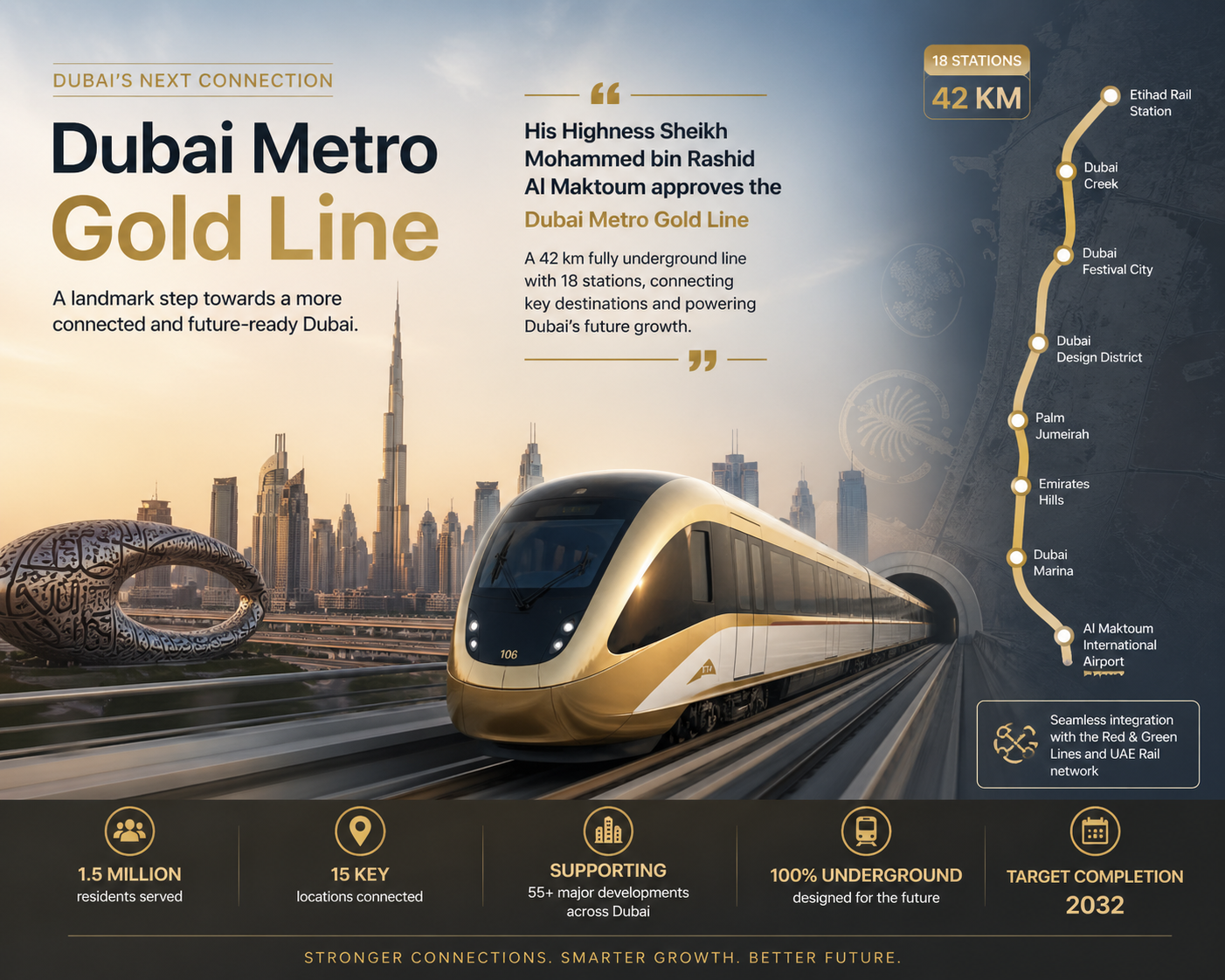
Sheikh Mohammed bin Rashid Al Maktoum approved the Dubai Metro Gold Line, 42 kilometres long, with 18 stations, fully underground, and carrying an AED 34 billion price tag. Scheduled for completion on 9 September 2032, this isn’t just a transport story. For those of us in real estate, it’s a masterclass in where value is heading next.
Let me break down what matters.
The Route Tells the Story
The Gold Line originates at Al Ghubaiba and cuts through some of the most strategically important corridors in the city, Mina Rashid, City Walk, Business Bay, Mohammed Bin Rashid City, Nad Al Sheba, Meydan, Al Barsha South, Jumeirah Village Circle, and terminates at Jumeirah Golf Estates.
Read that list again slowly.
These aren’t random stops. This line threads together Dubai’s historic core with its fastest-growing residential and mixed-use districts. Many of these areas have been strong performers already, but connectivity at this scale is a different conversation entirely.
The Numbers That Matter to Us
The RTA has projected that property values near Gold Line stations could increase by up to 20%. I’d argue that’s a conservative starting point given what we’ve seen historically around Red and Green Line corridors.
The line is expected to serve over 55 active development projects and benefit more than 1.5 million people by 2040, with daily ridership projected to exceed 465,000 passengers. When you combine that foot traffic with reduced commute friction, you’re looking at neighbourhoods that become meaningfully more liveable, and in real estate, liveability drives demand.
This Is Infrastructure at Speed
What also stands out is the delivery commitment. The Gold Line is planned to be completed 30% faster than the Blue Line, with tenders going out in 2026 and contracts awarded in 2027. Dubai has earned the credibility to make that kind of statement and be believed.
The project will expand the entire metro network from 120 kilometres to 162 kilometres, a 35% increase, bringing the total number of stations across the network to 85. That’s a city scaling its backbone in real time.
What This Means Practically
For buyers: areas along the Gold Line corridor that currently feel slightly disconnected are about to be repriced by the market, likely before the first tunnel boring machine breaks ground.
For developers: JVC, Nad Al Sheba, Meydan, and the southern Jumeirah belt deserve a serious second look if they’re not already in your pipeline.
For investors: the window between announcement and construction commencement is historically where the most rational value capture happens.
The Bigger Picture
I’ve been working in this market long enough to know that Dubai’s infrastructure decisions aren’t speculative; they’re commitments. The Gold Line connects to Etihad Rail at two points, linking this line not just to Dubai but to a national transportation network. That’s not a local story anymore.
Sheikh Mohammed put it plainly: “Our future projects will not stop — they will gather pace.”
That’s the operating thesis. And for those of us building, investing, and advising in this market, our strategy should reflect exactly that.
The map just changed. The question is whether you’re ahead of it or behind it.