

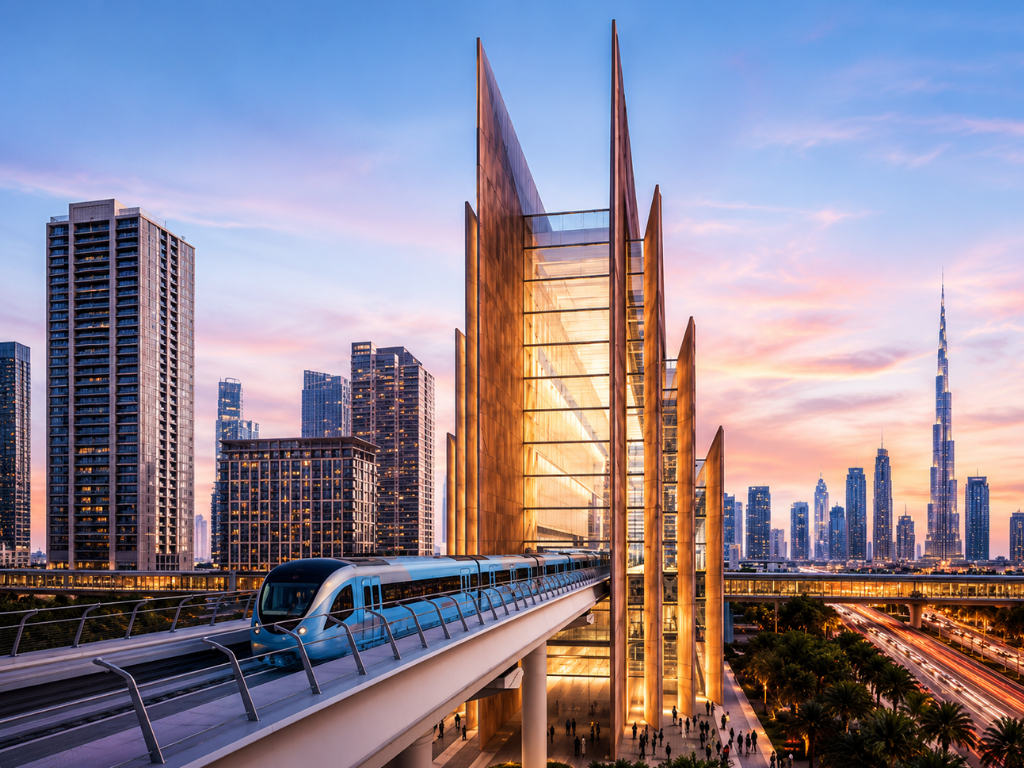
When evaluating a property investment, location is only part of the equation; connectivity is what ultimately drives long-term value. A project may appear “close to the metro” on paper, but if the journey involves long walks, poor pedestrian access, or inconvenient connections, that proximity doesn’t always translate into a better living experience or stronger investment performance.
Recognizing this, Dubai’s Roads and Transport Authority (RTA) has unveiled a major initiative designed to bridge that gap. While it may seem like just another infrastructure announcement, it has significant implications for the city’s future growth, the attractiveness of emerging communities, and the long-term potential of off-plan property investments.
Here’s what happened. The RTA approved a five-year plan to expand walking and cycling infrastructure across 25 residential areas, plus upgrades around 63 public transport stations, all running through 2030. It’s part of the bigger Dubai 2040 Urban Master Plan. Work’s already underway in Dubai Marina, Al Murar, Naif, Al Rigga and Al Muraqqabat.
Why “last mile” is the whole game
Think about it this way. A metro station within 2km of your building means nothing if getting there feels like an obstacle course. The actual value of proximity to transit isn’t the straight-line distance; it’s whether a normal person will actually walk it. Real estate people call this “first and last mile connectivity,” which is a fancy way of saying: can you get from your front door to the train without wanting to give up halfway?
And the RTA’s own numbers back this up. Pedestrian journeys across Dubai went from 326 million in 2024 to 342 million in 2025, a 5% jump in a single year. Cycling trips grew even faster, up 23% to 57.3 million. E-scooter trips climbed a similar 23%. People aren’t walking and cycling more because Dubai suddenly got cooler weather. They’re doing it because the infrastructure got good enough to make it worth it.
That’s the part that should catch your attention as a buyer or investor. When walkability goes up in a community, so does the appeal of every property inside it, without anyone lifting a hammer on the building itself.
What this means for the neighborhoods on the list
The current phase builds on nine areas the RTA already finished: Al Mankhool, Al Qusais, Al Karama, both Al Barsha zones, Al Khawaneej 2, Hor Al Anz, Abu Hail, and Al Souk Al Kabeer, plus upgrades around 37 metro stations including Mall of the Emirates, Burj Khalifa/Dubai Mall, BurJuman and Gold Souq. Look at those names. Several of them were already solid rental markets. Now they’re getting the connectivity layer that makes them genuinely liveable without a car, and by 2030 the total will stretch to 34 communities.
If you own or are considering off-plan in any of those zones or in the newly announced batch, this is worth factoring into your hold strategy. Improved pedestrian and cycling infrastructure tends to lift rental demand from a specific group: people who work in the city but don’t want the cost or hassle of running a car. That’s a growing segment in Dubai, and it’s exactly the tenant profile that pays consistently and stays long-term.
What to actually do with this
Honestly, the practical move here is simple. When you’re evaluating an off-plan project, don’t just ask “how far is the metro station.” Ask what the RTA has planned for the walking and cycling infrastructure around it, and whether the community sits inside one of these connectivity phases. A five-minute Google search on the project’s district against the RTA’s published list can tell you more about long-term rental appeal than half the marketing brochures you’ll be handed.
Location was always the thing that mattered most in real estate. What’s changing is how we measure it: less “how many kilometres,” more “how easy is the actual walk.” Worth remembering next time someone tells you a project is close to the metro.