

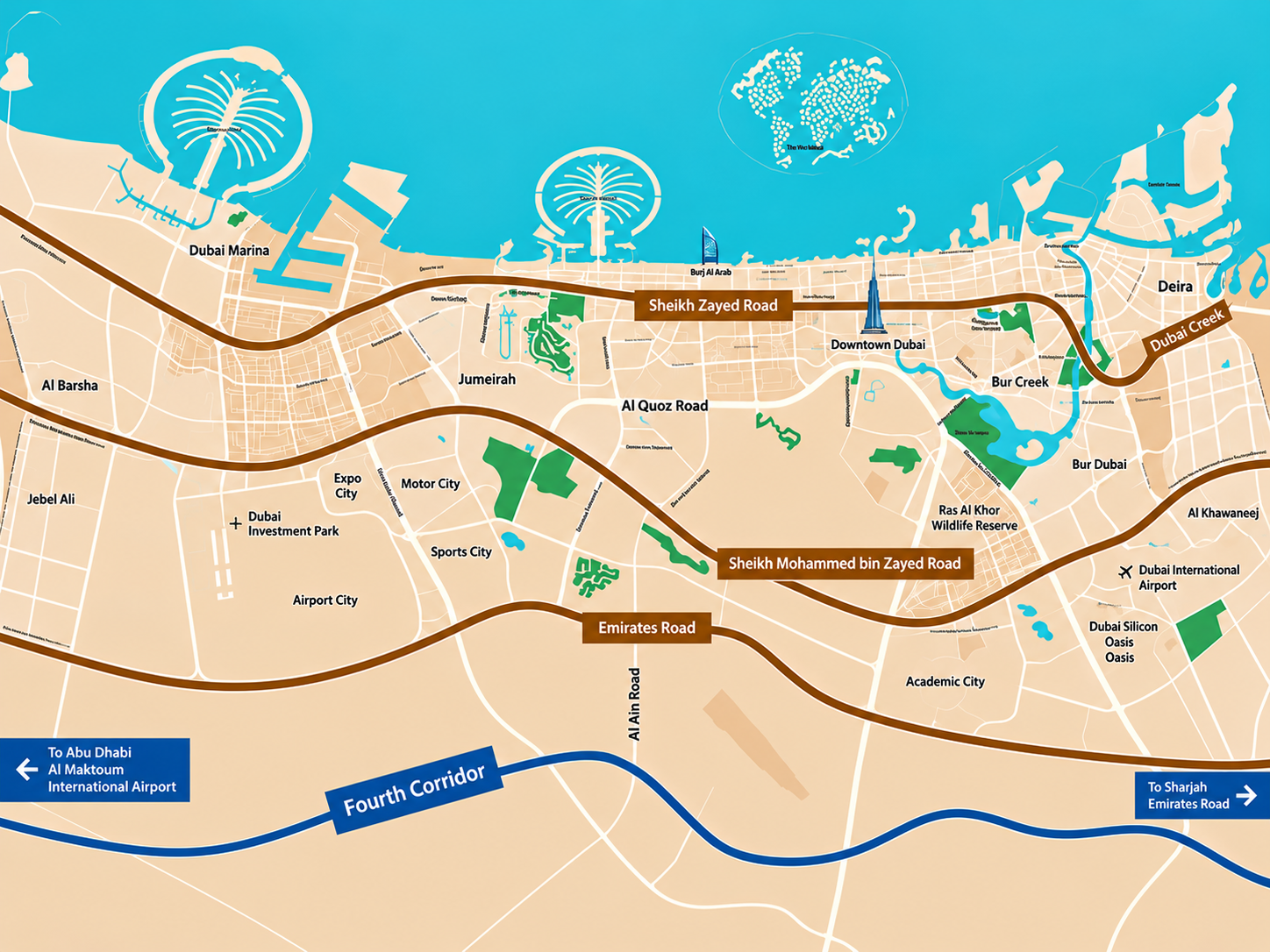
In Dubai, distance on a map and distance in real life aren’t always the same thing. A neighbourhood can look far out until a new road, interchange, or transport connection suddenly changes how people move through the city.
And that’s why Dubai’s newly approved New Fourth Corridor deserves more attention than just another headline about a big road project.
This isn’t a small road widening or another exit being added somewhere.
We’re talking about an approximately 80-kilometre corridor running from Al Shanouf Road in Sharjah, through Dubai, to Al Faya Road in Abu Dhabi. Once developed, it will become the UAE’s fourth major strategic inter-emirate road corridor, alongside Sheikh Zayed/Al Ittihad Road, Sheikh Mohammed bin Zayed Road and Emirates Road.
And when you look at where the road goes, especially its connection to Al Maktoum International Airport, Etihad Rail, and Dubai’s future development areas, the story becomes much bigger than traffic.
So, what exactly is Dubai’s New Fourth Corridor?
Think about it this way.
Dubai, Sharjah, and Abu Dhabi already have several major highways carrying an enormous amount of daily traffic between them.
But the population is growing. New communities are spreading further out. Dubai South is developing. Al Maktoum International Airport is expanding. Logistics activity is increasing.
You can’t keep sending all of that movement through the same few roads forever.
So Dubai is essentially creating another major artery.
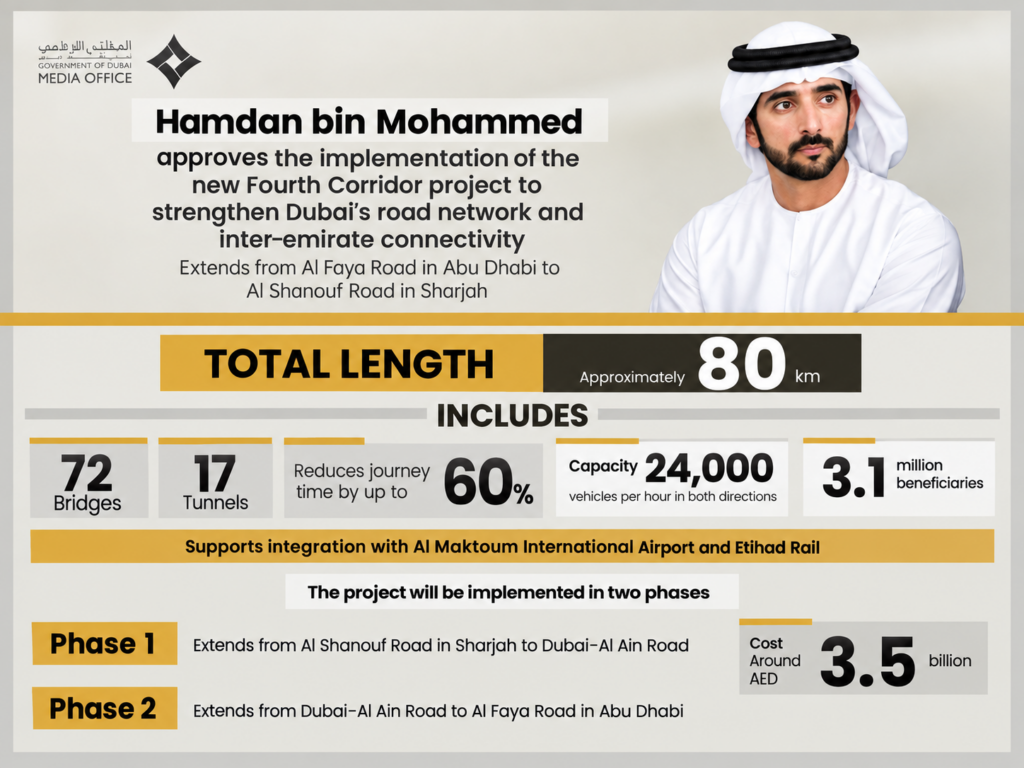
The New Fourth Corridor will span roughly 80km and will be developed in two phases. Across the full project, plans include 72 bridges, 17 tunnels, and 45 stormwater drainage culverts. The route will pass Al Maktoum International Airport, Al Marmoom Desert Conservation Reserve, Al Wohoosh Desert Conservation Reserve, the Etihad Rail route, and several residential and development areas.
That’s a serious piece of infrastructure.
Phase One: Sharjah to Dubai–Al Ain Road
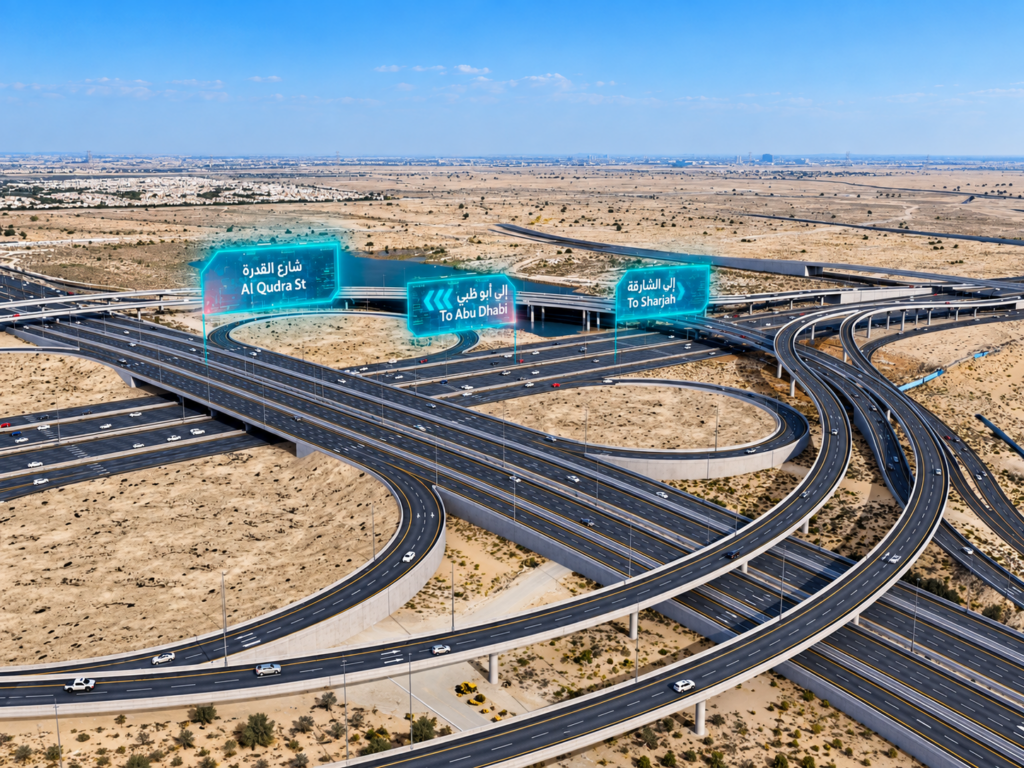
The first phase is roughly 30 kilometres, running from Al Shanouf Road in Sharjah to Dubai–Al Ain Road.
And this is where the numbers start becoming interesting.
The phase is expected to cost around AED 3.5 billion and will create a corridor with 12 lanes across both directions, capable of handling up to 24,000 vehicles per hour. Around 600,000 people are expected to be served by this section.
The projected journey-time improvement is significant.
A trip currently taking around 35 minutes could fall to approximately 14 minutes, a reduction of about 60%.
Phase One also involves around 55 lane-kilometres of surface roads, 2.5km of tunnels, and 21km of bridges and ramps.
Dubai–Al Ain Road will also be widened from three lanes to four lanes in each direction between Emirates Road and Lehbab Road, while four major intersections are planned for upgrades.
And that’s important because we’re not simply talking about building one isolated highway. The surrounding network is being adjusted with it.
Phase Two: Dubai–Al Ain Road to Abu Dhabi
Then comes the much larger second section.
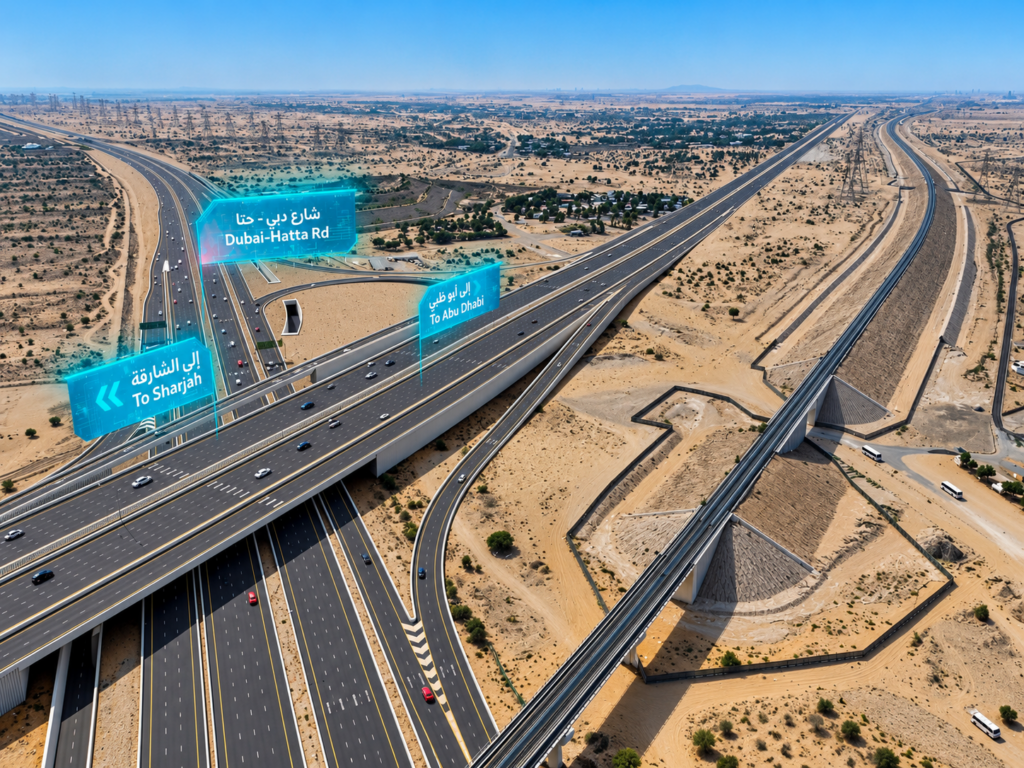
Phase Two will cover approximately 50 kilometres, continuing from Dubai–Al Ain Road towards Al Faya Road in Abu Dhabi.
Again, plans call for 12 lanes across both directions and a capacity of approximately 24,000 vehicles per hour.
According to the official announcement, this section is expected to reduce a roughly 50-minute journey to around 24 minutes, a 52% reduction while serving approximately 3.1 million people.
It will also involve about 190 lane-kilometres of surface roads, 3.5km of tunnels, and 157km of bridges and ramps.
So yes… calling this a “new road” almost undersells it.
One of the biggest changes may actually be what disappears from existing roads
Here’s something that might matter more to residents than all the big infrastructure numbers.
Trucks.
One of the stated purposes of the corridor is to divert through traffic, particularly heavy vehicles, away from urban areas.
That should help reduce pressure on some existing road corridors while improving traffic flow and road safety.
And anyone who drives regularly between Dubai, Sharjah and Abu Dhabi knows why that matters.
Sometimes improving a city’s roads isn’t about getting your car onto a faster highway.
It’s about removing traffic that never needed to be on your road in the first place.
But here’s the part property investors should really be watching
Whenever a massive infrastructure project gets announced in Dubai, you’ll usually hear the same sentence almost immediately:
“Property prices there are going to go up.”
Maybe.
But I’d be careful with that kind of thinking.
A new road doesn’t automatically turn every nearby property into a good investment.
What it can do is change accessibility.
And accessibility is a much more interesting conversation.
Imagine a community that previously felt disconnected because getting to the airport, employment centres, or another emirate involved a long drive through several congested roads.
Now imagine cutting part of that journey significantly.
Same house.
Same location.
Different experience.
That’s when people’s perception of distance starts changing.
The Al Maktoum International Airport connection is particularly interesting
The Fourth Corridor is planned to connect into the transport network around Al Maktoum International Airport, as well as Etihad Rail. The government says the corridor is intended to support logistics and commercial transport while keeping pace with urban expansion in new areas.
That sentence matters.
Because Dubai isn’t just trying to fix today’s traffic.
It’s building infrastructure around where tomorrow’s population and economic activity are expected to go.
And we’re already seeing development gathering around that part of Dubai.
For example, Dubai South announced in 2026 that construction was moving forward on the 10-million-square-foot HAYAT residential community near Al Maktoum International Airport, with approximately 2,500 planned homes.
At the same time, work continues on the airport itself, which is ultimately planned for capacity exceeding 260 million passengers annually in its final phase.
Put those pieces together and you start seeing the bigger picture.
Airport.
Rail.
Highways.
Homes.
Jobs.
Logistics.
They don’t exist separately.
They’re forming an ecosystem.
This is how Dubai often grows
Infrastructure usually arrives before that conversation becomes obvious.
A road gets announced.
Then an interchange.
Then a school.
Then retail.
Then suddenly someone says, “That area isn’t actually far anymore.”
And that’s usually when everyone starts paying attention.
For an off-plan buyer, that’s worth understanding.
At Cielo Properties, when we’re looking at emerging locations, we don’t just look at the apartment or villa being sold today.
We ask a different question:
What will life around this property look like when it’s actually handed over?
Because if you’re buying something completing in three or four years, today’s commute isn’t necessarily the commute that matters.
And there’s another detail worth knowing: this won’t happen overnight
The Fourth Corridor has been approved for implementation in two phases.
Phase One has an estimated cost of around AED 3.5 billion, but the official September 16 announcement did not publish an overall completion date for the full 80km corridor.
So what should property buyers watch next?
I’d keep an eye on three things.
First, the exact alignment and interchanges as more detailed plans are released. A road running near your community isn’t the same as convenient direct access.
Second, development around Al Maktoum International Airport and the wider southern Dubai growth corridor.
And third, how the Fourth Corridor connects with other infrastructure rather than looking at it alone.
Because that’s really the story here.
Not one road.
A network.
Dubai is connecting highways, airport infrastructure, Etihad Rail, logistics zones, and future residential communities together. The Fourth Corridor simply gives us another clue about the direction that network is expanding.
The bigger takeaway
Look, nobody should buy a property because of one infrastructure announcement.
But you shouldn’t ignore infrastructure either.
Roads quietly shape cities.
They change commuting patterns, move businesses, open land for development and make places that once felt inconvenient suddenly feel perfectly normal.
The New Fourth Corridor is about 80 kilometres long, but its real impact could be measured in something much simpler:
time.
A 35-minute journey becoming 14.
A 50-minute journey becoming 24.
Heavy through-traffic being shifted away from populated areas.
And millions of people getting another way to move between Sharjah, Dubai and Abu Dhabi.
If you’re looking at an off-plan property around Dubai’s emerging growth areas, don’t just ask what the neighbourhood looks like today.
Pull up the future transport map too.
Sometimes that’s where the more interesting story is hiding.