

By a Senior Broker at Cielo Properties
Dubai has changed quickly over the past few years. More people have moved here. More businesses have opened. New neighbourhoods have appeared almost overnight. And along with all that growth, housing costs have become a much bigger part of the conversation.
For people already living here, that conversation is usually pretty simple.
Can I still afford to live where I actually want to live?
And for someone thinking about buying?
It becomes: Do I keep paying rent, or does it finally make sense to own something?
That’s why Dubai’s push toward more affordable housing is worth paying attention to. Not because affordable housing suddenly replaces the luxury market Dubai is famous for; it won’t.
But because a healthy city can’t run on penthouses alone.
Teachers live here. Nurses. Engineers. Hospitality workers. Young executives. Families starting out. People building businesses. People who aren’t looking for a AED 30 million villa on the Palm.
They need homes too.
And Dubai seems increasingly aware of that.
Dubai Has Already Put More Than 17,000 Affordable Homes on the Plan
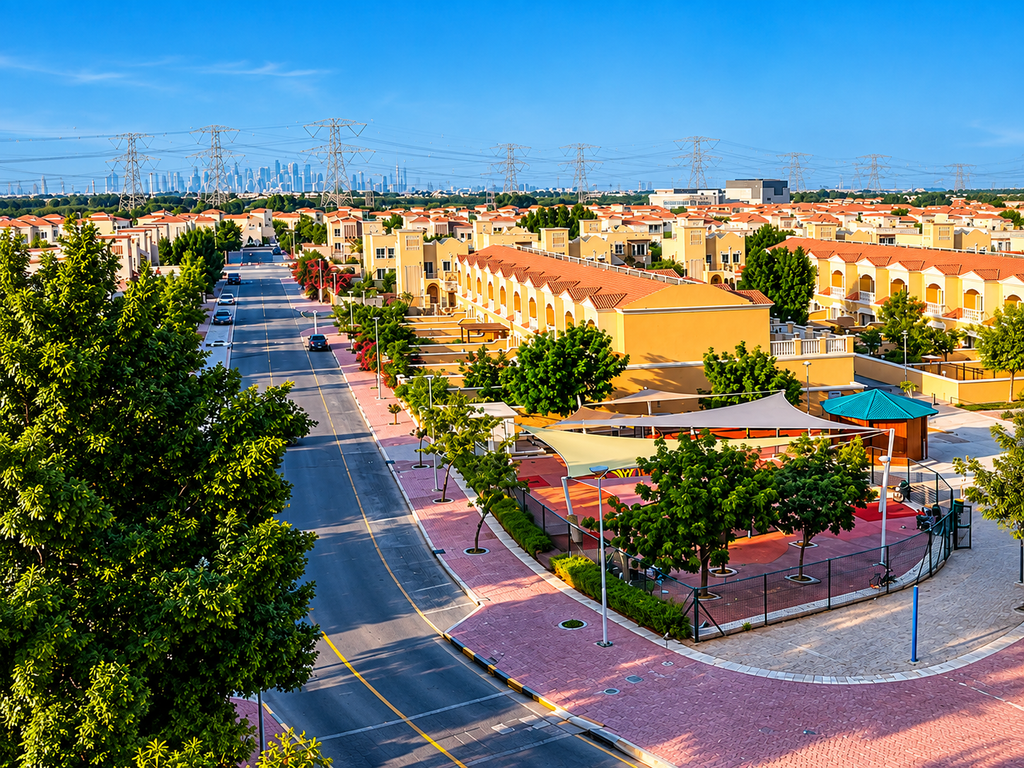
One of the clearest signals came when Dubai approved the development of 17,080 affordable residential units, supported by the allocation of around 1.46 million square metres of land.
The first phase covers six sites spread across Al Mueisim 1, Al Twar 1, Al Qusais Industrial Area 5 and Al Leyan 1. The homes are intended particularly for skilled professionals working in important public and private-sector roles, with affordable rental rates and access to infrastructure and everyday services.
And there’s an important detail here.
This isn’t simply about building cheaper apartments somewhere far outside the city and calling the problem solved.
Dubai’s broader Affordable Housing Policy talks about creating communities connected to employment centres, infrastructure, and essential services. The implementation agreement for these projects also ties the programme to Dubai’s idea of a 20-minute city, essentially making daily needs easier to reach without spending half your life commuting.
That part matters more than people sometimes realise.
Because a cheap apartment stops feeling cheap very quickly if you’re spending two hours a day driving to work.
“Affordable” Doesn’t Have to Mean Basic
This is where people sometimes get the wrong picture.
Say “affordable housing” and you might imagine tiny apartments, stripped-back buildings and communities where the only selling point is the price.
But that isn’t really the direction Dubai’s planning policy describes.
The Dubai 2040 Urban Master Plan talks about providing affordable housing with access to jobs, public transport, amenities and open spaces. It also calls for different housing types for different income levels rather than treating everybody as if they need the same thing.
Think about it this way.
A young professional earning a decent salary might not need subsidised housing. But they might need a well-designed studio or one-bedroom at a price that doesn’t swallow half their monthly income.
A couple having their first child probably wants something different.
And a family with two children may be perfectly happy living slightly farther from Downtown if the trade-off is another bedroom, a park downstairs and a school ten minutes away.
That’s the real affordability conversation.
Not simply:
“How cheap is it?”
But:
“What kind of life does this price actually buy me?”
There’s a big difference.
The Middle of Dubai’s Market Matters More Than It Gets Credit For
Luxury real estate gets the photographs.
Beachfront villas. Private pools. Branded residences. AED 100 million deals.
They’re exciting. We work with those buyers too.
But spend enough time speaking with real clients and you realise just how much of the market lives somewhere in the middle.
At Cielo Properties, we regularly speak with people who aren’t trying to buy the biggest home they can possibly afford.
They’re trying to make a sensible move.
Maybe they’re paying AED 80,000 or AED 100,000 every year in rent and wondering whether some of that money could instead go toward owning an apartment.
Maybe they have AED 150,000 or AED 200,000 saved, but putting every dirham into a down payment would leave them uncomfortable.
Or maybe they could afford more but simply don’t want to.
That last buyer is more common than people think.
Having a AED 2 million budget doesn’t automatically mean you should spend AED 2 million.
Sometimes the better property is the one that gives you breathing room.
Dubai Is Also Making the First Purchase Easier
Housing affordability isn’t only about building cheaper homes.
You also have to make the jump from renting to owning realistic.
Dubai launched its First-Time Home Buyer Programme in July 2025 for UAE residents aged 18 and above who don’t currently own a freehold residential property in Dubai and are looking at homes below AED 5 million.
Depending on the participating developer or bank, benefits can include priority access to new launches, preferential pricing, flexible payment options and tailored mortgage offers.
And this hasn’t remained a small pilot programme.
By June 2026, Dubai authorities said more than 3,200 residents had bought their first homes through the programme, generating more than AED 5 billion in residential transactions. The programme had also expanded to 22 participating developers and five banks.
That’s interesting.
Because it tells us something beyond the headline number.
There are people living in Dubai who want to become homeowners.
They just need the numbers to work.
Rent Is Changing Too
Buying isn’t the answer for everyone.
Sometimes you’re here for two years.
Sometimes your job situation isn’t settled.
Sometimes you’ve got money invested elsewhere and don’t want to lock it into property.
Perfectly reasonable.
Dubai has also started experimenting with making renting more flexible.
In June 2026, Dubai Land Department launched its Flexi Rent initiative with participating property companies, allowing rental payment structures that can include monthly, quarterly and semi-annual instalments.
That sounds like a small administrative change.
It isn’t.
Anyone who’s rented in Dubai knows the pain of looking at a perfectly manageable annual rent and then being told:
“Two cheques.”
Suddenly you’re not thinking about whether AED 90,000 a year is affordable.
You’re thinking about finding AED 45,000 by Thursday.
Cash flow matters.
Sometimes almost as much as price.
But Don’t Confuse “Affordable” With “Good Investment”
This is the point where I put my broker hat on.
A lower price doesn’t automatically make a property a bargain.
And a developer offering a studio at AED 600,000 doesn’t automatically mean you’ve found the next great investment opportunity.
You still need to ask the boring questions.
Actually, especially the boring questions.
What’s being built around it?
Who’s going to rent there?
How many similar units are coming?
What’s the service charge likely to be?
Can you realistically resell it?
How far is it from major employment areas?
What’s the payment plan?
And who is the developer?
Because buying the cheapest unit on a spreadsheet is easy.
Buying something that people will still want five or ten years from now takes more thought.
Here’s what I mean.
Imagine two apartments.
Apartment A costs AED 650,000 but sits in an isolated development with thousands of nearly identical studios being delivered around it.
Apartment B costs AED 800,000 but sits near transport, shops, employment centres and an established residential community.
Which one is actually more expensive?
You can’t answer that from the purchase price alone.
That’s why I always tell buyers: don’t shop for price. Shop for value.
They’re not the same thing.
Dubai South, International City, Dubailand… Location Is Being Redefined
There was a time when people dismissed certain parts of Dubai because they felt “too far.”
Then Dubai grew.
Roads expanded.
Schools opened.
Retail followed.
Businesses moved.
New infrastructure arrived.
And yesterday’s outskirts became today’s communities.
We’ve watched that happen repeatedly.
That’s why affordable housing and infrastructure have to be looked at together.
Dubai’s 2040 planning strategy specifically links housing development with urban centres, jobs, amenities and public transport.
The question investors should be asking isn’t simply:
“Is this area far from Downtown?”
It should be:
“What will people need this area for five years from now?”
Very different question.
Dubai isn’t one downtown surrounded by suburbs anymore.
It’s becoming a city of multiple centres.
And that changes the property map.
So Is Dubai Becoming “Affordable”?
That’s probably going too far.
Dubai contains several different property markets at the same time.
You can have record-breaking villa transactions on Palm Jumeirah while somebody else buys their first studio 30 kilometres away.
Both are Dubai real estate.
And that’s kind of the point.
The next phase of the market doesn’t have to choose between luxury and affordability.
It needs both.
A city attracting entrepreneurs, multinational companies, wealthy investors and global talent also needs somewhere for the people running its schools, hotels, hospitals, restaurants, offices and businesses to live.
Otherwise growth eventually creates its own problem.
Dubai’s affordable-housing plans suggest that policymakers understand that equation.
What I’d Do If I Were Buying My First Dubai Property
I wouldn’t begin on a property portal.
I’d begin with a calculator.
Look at what you’re paying in rent.
Look at how much cash you actually have available — not how much you’re willing to empty from your bank account.
Then ask yourself how long you’re realistically planning to stay in Dubai.
Three years?
Seven?
Forever?
Once you know those three things, you can start comparing the real options.
Ready property versus off-plan.
Mortgage versus payment plan.
Established community versus emerging area.
One-bedroom versus studio.
Living in it versus renting it out later.
Suddenly the hundreds of listings on your screen become maybe ten sensible choices.
Then five.
Then two.
That’s much easier.
And that’s really how we approach these conversations at Cielo Properties. The job isn’t to convince somebody to buy the most expensive property their bank will approve.
It’s to figure out what they’re actually trying to achieve first.
Because whether we’re talking about a AED 700,000 first home or a AED 30 million villa, the principle is surprisingly similar:
The property has to make sense after the excitement of buying it wears off.
Dubai’s push toward more affordable housing is opening another door in the market.
For renters, that could eventually mean more choice.
For first-time buyers, it creates another path toward ownership.
And for investors, it means paying closer attention to the part of Dubai’s property market that rarely gets the glamorous headlines…
but where a lot of people actually live.
And sometimes, that’s exactly where the interesting opportunities begin.